News
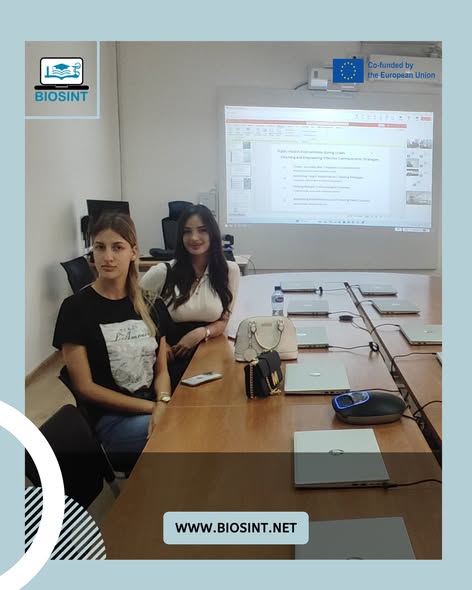
Dr. Neada Hysenaj delivered an insightful and comprehensive lecture as part of the Health Management in Crisis course, focusing on the topic "Introduction to Health Crises and Crisis Management."
Her presentation covered several critical aspects of crisis preparedness and response in healthcare, starting with definitions and classifications of health crises. These included pandemics, natural disasters, armed conflicts, and systemic failures within healthcare infrastructures.
Dr. Hysenaj emphasized the core principles of crisis management, such as rapid assessment, coordinated response, resource allocation, and maintaining continuity of care during emergencies. She highlighted how different types of crises affect not only healthcare systems but also the broader scope of public health.
A particularly important segment of the lecture was dedicated to the impact of health crises on dental care and practice, a topic often overlooked in broader health discussions. Dr. Hysenaj illustrated ... >> More info
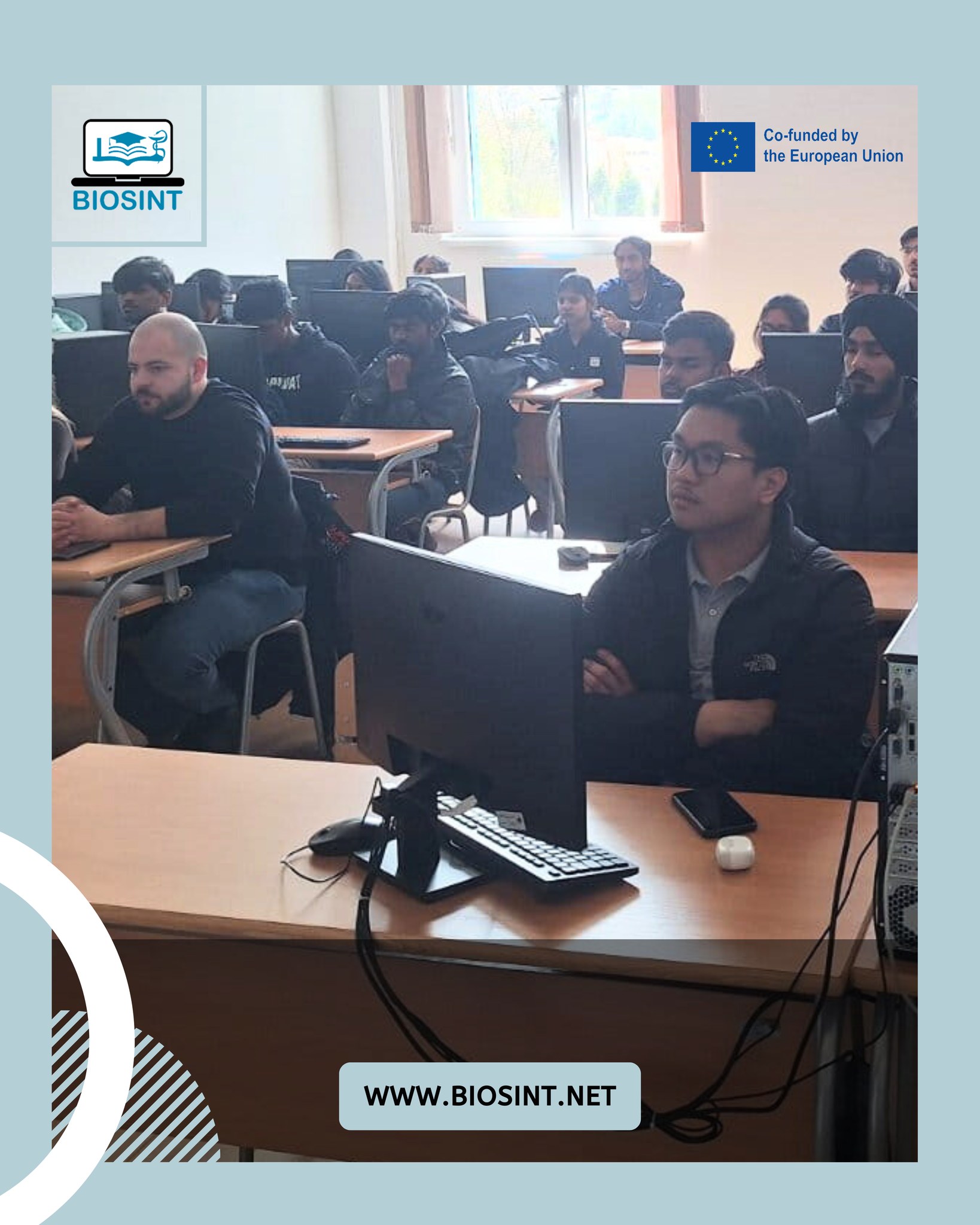
In the first week of the Medical Nutritional Therapy course, the following lectures were held:
Prof. Dr. Vladimir Jakovljevic delivered two comprehensive lectures covering essential physiological and nutritional concepts. In the first part, he focused on the physiology of digestion and absorption, emphasizing the metabolic pathways of the three main macronutrients: proteins, lipids, and carbohydrates. He explained how each of these nutrients is broken down, absorbed, and utilized in the body, highlighting their distinct metabolic roles and regulatory mechanisms.
In the second part of his lecture, Prof. Jakovljevic addressed the nutritional requirements for energy and macronutrients, outlining the daily needs for proteins, fats, and carbohydrates. He also discussed the importance of water and electrolyte balance in maintaining physiological homeostasis. Furthermore, he explored the nutritional needs for vitamins and trace elements, noting common deficiencies, their clinical implicatio... >> More info
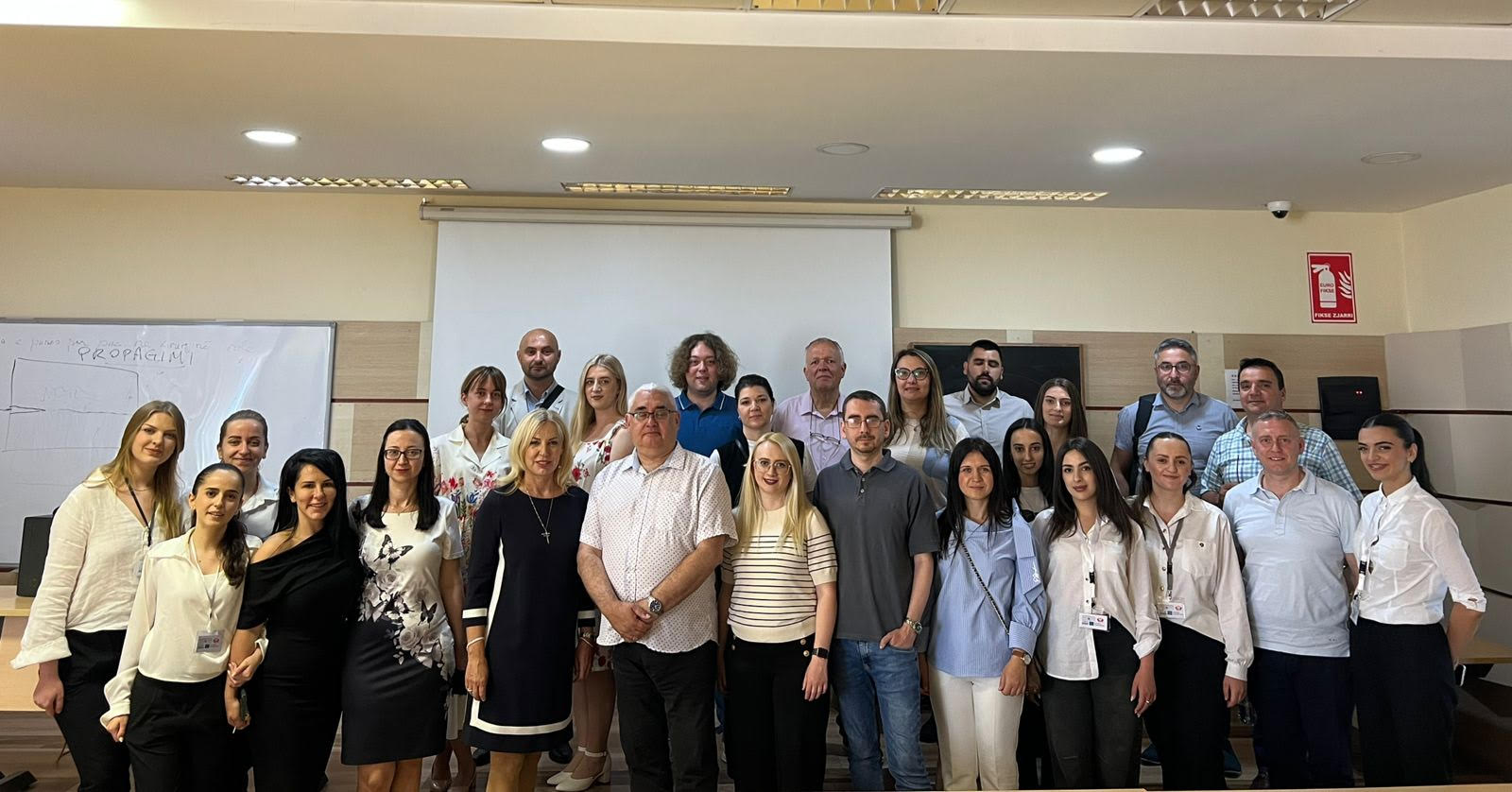
On June 4 and 5, 2025, the next meeting of the European Union Project, BIOSINT, “Strengthening Capacities and Digital Competences in Biomedical Education through Internationalization at Home”, was successfully held at the Faculty of Dental Medicine, University of Medicine, Tirana.
This project, part of the Erasmus+ program (Strand 2 – Capacity Building in Higher Education) and co-financed by the European Union, is coordinated by the University of Kragujevac, Serbia, and brings together 9 (nine) partner universities from the Balkans and the EU to strengthen institutional capacities and integrate internationalization and digital competences in biomedical education.
During the meeting, the concrete results of the project for the Faculty of Dental Medicine were presented, including:
Completion of the institutional analysis on internationalization at home;
Drafting and adoption of the Strategy for Internationalization at Home;
Integration of international elements into the curricula (3... >> More info
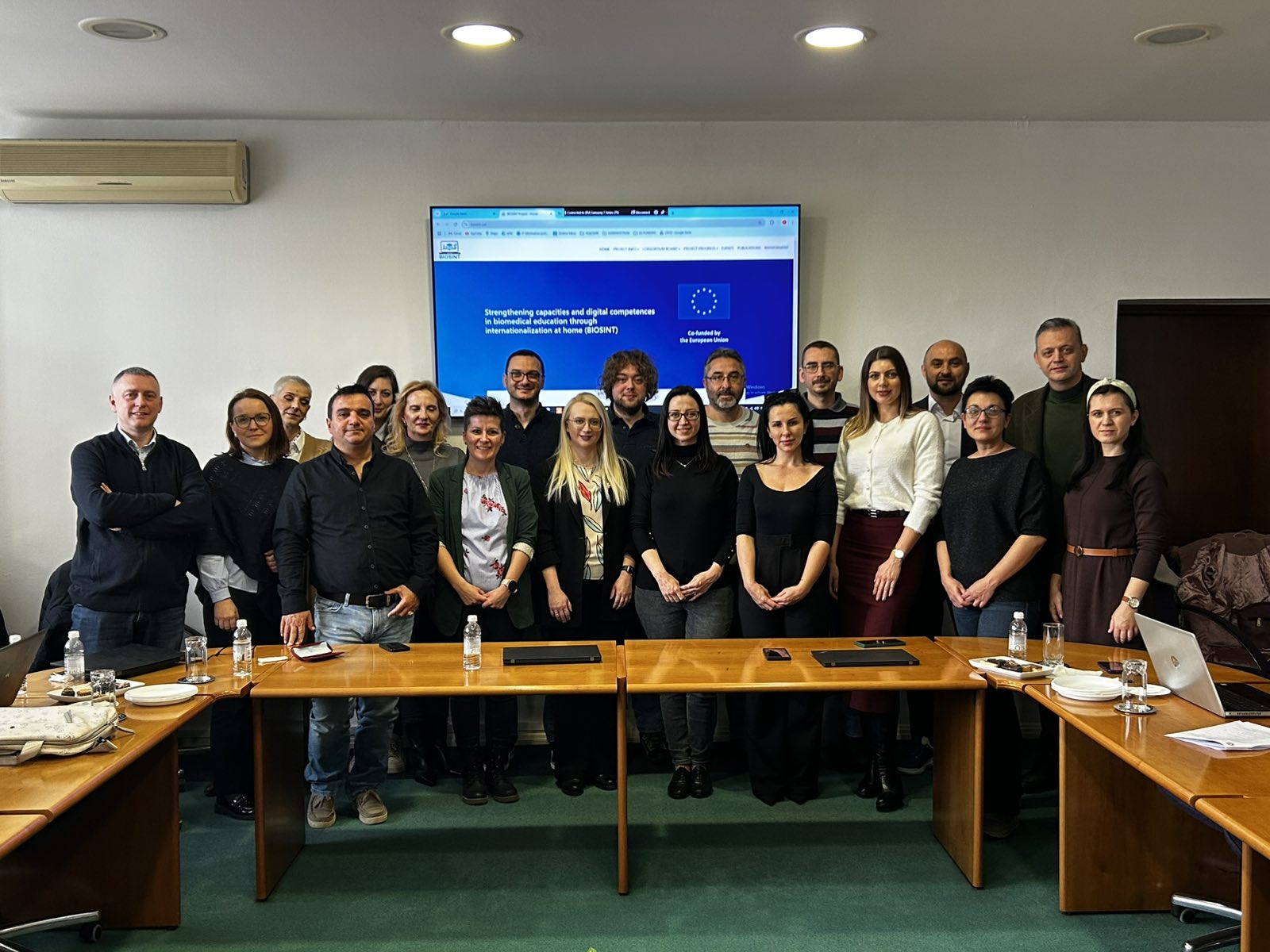
At the University of Tuzla, from 5 to 6 December 2024, a workshop entitled Virtual Classroom for the Development of New Virtual Courses within the Erasmus+ BIOSINT Project, entitled “Strengthening Capacities and Digital Competences in Biomedical Education through Internationalization at Home – BIOSINT”, was held.
The consortium is led by the University of Kragujevac. The workshop brought together partners from the University of Kragujevac, KU Leuven, University of Timisoara, University of East Sarajevo- Faculty of Medicine in Foča, University of Podgorica, Luigj Gurakuqi University of Shkodra, University of Mostar, and University of Tirana (Dental Clinic), with the aim of strengthening capacities and digital competencies in biomedical education through the process of internationalization at the domestic level.
This important event enabled the exchange of experiences, improvement and harmonization of educational programs with modern global standards. Participants had the opportunity t... >> More info
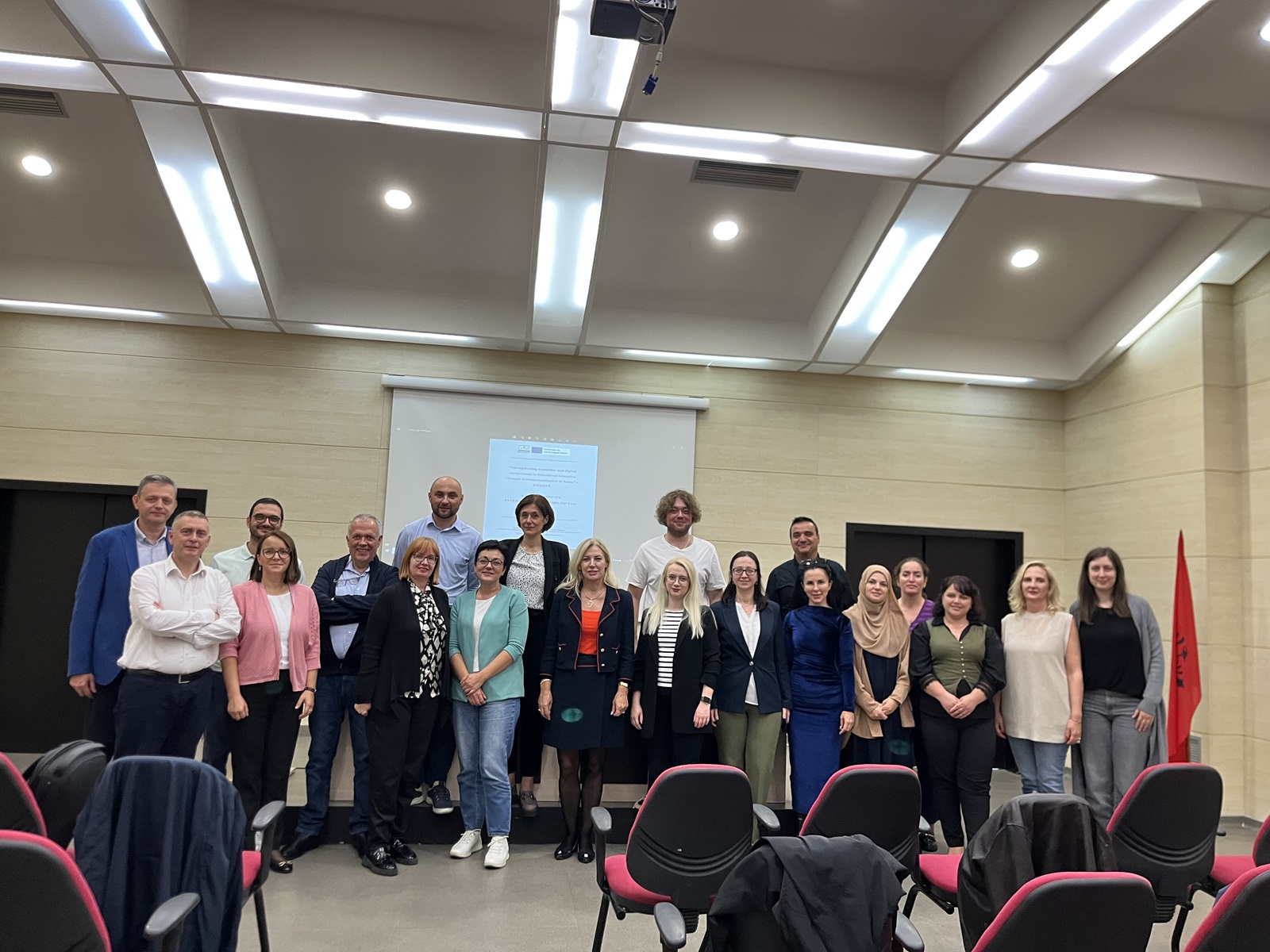
A very important workshop on internationalization of curriculum was held in Shkodra, Albania from 8-11 October 2024. The host of this workshop was the University of Shkodra. All project partners attended the workshop except the University of Mostar and UMFT Timisoara who attended online.
The aim of the workshop was to present possible ways of internationalizing the curriculum, and to find models for the key factors that will make up an internationalized curriculum through discussions in small groups. The working groups presented that internationalized student learning outcomes, internationalized content, internationalized teaching and learning activities and internationalized assessment methods represent key aspects of internationalization of the curriculum. The details were certainly discussed to a large extent so that a structure was created according to which the internationalization of the curriculum can be implemented. >> More info